Fabio Berberi
Algorithms, Data Science & Artificial Intelligence
f.berberi@student.unisi.it
I engineer intelligent systems that transform complexity into clarity — combining advanced algorithms, data-driven reasoning, and scalable design to solve real-world problems.
Academic Journey
My academic trajectory is driven by a strong interest in optimization, artificial intelligence, and complex systems. I began my studies at the University of Siena, building a solid foundation in mathematics, engineering, and computational methods. During my Erasmus experience at Leuphana University of Lüneburg, I worked in an international environment, collaborating with diverse teams and deepening my knowledge of control systems and advanced modeling. A key role in my development has been played by Paolo Mercorelli, whose guidance and support have been fundamental. His mentorship has significantly strengthened my approach to research, helping me connect theoretical concepts with real-world applications. I have independently developed several research-oriented projects focused on optimization algorithms, Particle Swarm Optimization (PSO), and machine learning, with applications ranging from neural networks to pandemic modeling and safety-critical systems. In parallel, I have worked on industrial problems related to data analysis and error pattern detection in production systems, in collaboration with environments connected to companies such as Volkswagen. My goal is to bridge theory and practice by developing scalable algorithms for complex, high-dimensional problems in both academic and industrial contexts.
Publications
[1] Crash Scenario Optimization using Domain-as-Particle PSO
Abstract
The safety assessment of vehicles consists of both active and passive systems and crash conditions. Physical crash testing provides reliable information, yet it is costly, and large-scale numerical simulations quickly become computationally expensive. Therefore, key crash parameters such as impact velocity, collision angle, vehicle mass ratio, and structural stiffness are modeled as optimization variables, building upon previous work in multi-objective PSO-based crashworthiness optimization. We propose a Domain-as-Particle PSO (DaP-PSO) approach, where the parameter space is partitioned into non-overlapping subdomains, each acting as an independent particle. This structured formulation improves search efficiency, robustness, and convergence compared to classical PSO.
Conference: ICCI 2025 — Surat, India
Download Paper[2] Domain-as-Particle with PSO Methods for Neural-Network Feature
Abstract
We present a framework that integrates Particle Swarm Optimization (PSO), machine learning, K-Fold cross-validation, and surrogate modeling to identify optimal weight vectors for feature scaling in neural network training. In our approach, the n-dimensional weight space is partitioned into non-overlapping subdomains, each corresponding to a PSO particle. Particle movement is guided by a characteristic vector determined by the best-performing candidates in each subdomain and by information exchanged with neighboring regions. To reduce evaluation costs, a surrogate model—trained on a uniformly sampled subset of candidates—pre-filters particles before full K-Fold validation.
DOI: 10.15439/2025F1427
FedCSIS — Krakow, Poland
Download Paper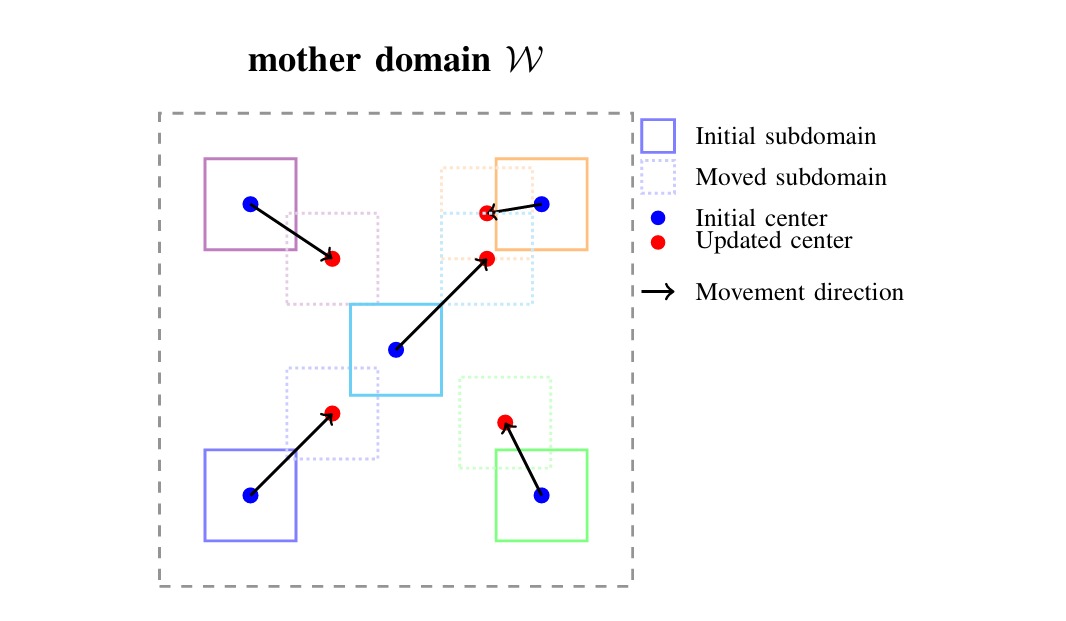
[3] Optimal Vaccination Strategies for Pandemic Control: A Cost-Driven SIR Model with Domain-as-Particle PSO Optimization
Abstract
This chapter extends and improves upon a previously published SIR-based pandemic model with feedback vaccination law, which established a sufficient condition for achieving herd immunity through the minimization of a cost function combining both vaccination effort and intervention time. Here, we introduce an advanced Particle Swarm Optimization (PSO) strategy based on a domain-as-particle paradigm, in which the parameter space is partitioned into non-overlapping subdomains, each acting as an independent PSO particle. This approach enables structured exploration of the solution space and enhances both convergence speed and robustness.
Conference: icSoftComp2025 — Hanoi, Vietnam
Proceedings: Springer Proceedings
Download Paper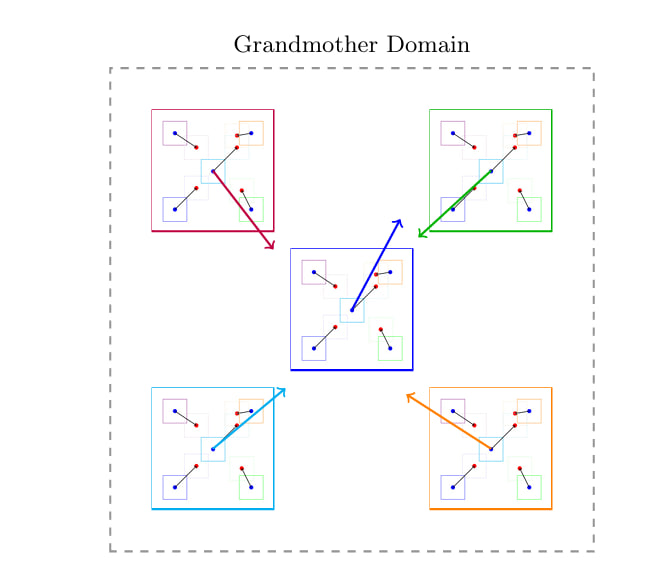
[4] TGWO-SA: A Territorial Grey Wolf Optimizer Enhanced by Simulated Annealing, Perturbation Dynamics, and Natural Selection
Abstract
In this work, we introduce a refined version of the Grey Wolf Optimizer algorithm called TGWO-SA. The method integrates Simulated Annealing as a refinement phase, enabling improved local search capabilities. The algorithm incorporates adaptive population sizing and a communication mechanism inspired by wolf-pack cooperation, together with periodic elimination of poorly performing individuals, introducing a natural selection dynamic. Additionally, stochastic perturbations are applied to the best solution during local exploration, enhancing diversification and avoiding premature convergence.
Keywords: Grey Wolf Optimizer · Simulated Annealing · Hybrid Optimization · Perturbation
Conference: ICCI 2025 — Surat, India
Download Paper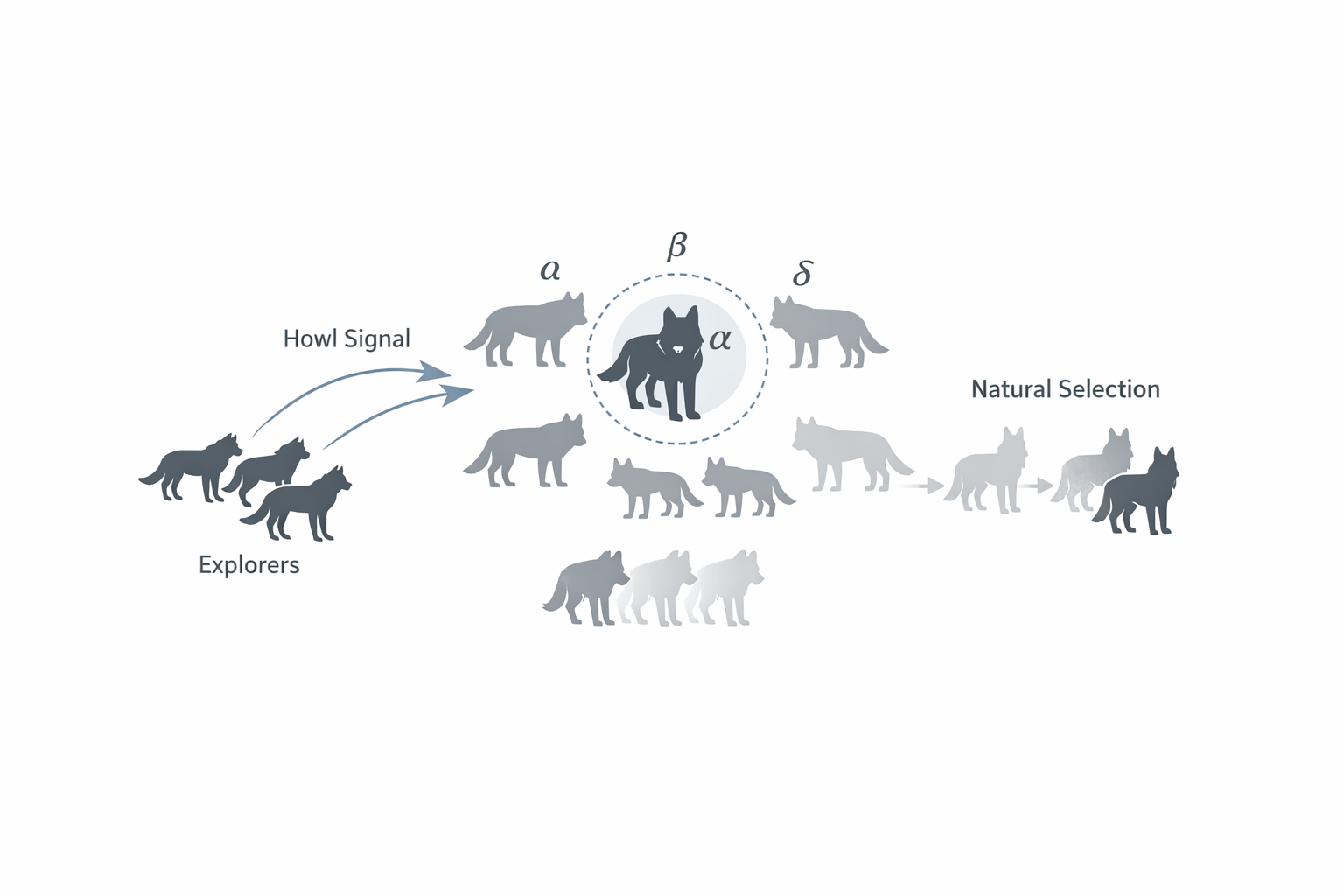
[5] Event-Triggered Robust Kalman Filtering with Firefly Optimization, Conformal Triggering, and Sparse Sensor Gating for Healthcare Monitoring
Fabio Berberi — University of Siena, Italy | Paolo Mercorelli — Leuphana University of Lüneburg, Germany
Abstract
Efficient and reliable monitoring of healthcare signals is a key challenge for edge computing and IoT-based clinical systems. We propose a novel event-triggered Kalman filtering framework enhanced by multiple advanced components. The method integrates Firefly-based initialization and bilevel energy–accuracy optimization, robust innovations with conformal triggering and change-point adaptation, and adaptive noise tuning via neural modulators combined with online EM and stability projection. Experimental results on real-world datasets (MIT-BIH ECG, PhysioNet PPG) and synthetic healthcare data demonstrate that the proposed method reduces update rates by up to 70%, achieves latency below 3 ms on CPU devices, and maintains robustness under noise, missing data, and sensor faults.
Keywords: Kalman Filter · Firefly Algorithm · Event-triggered filtering · Healthcare Monitoring
Download Paper